
Autobarn
Product Cards for the Drivers
Read in 4 minutes
Problems
Customer Struggles
Customers need to know that the right part, at the right price, will actually fit their car before they commit.
Design Principles
The Big Four
Behind every design decision there were four principles to support rationale.
The basic card
Card Skeleton
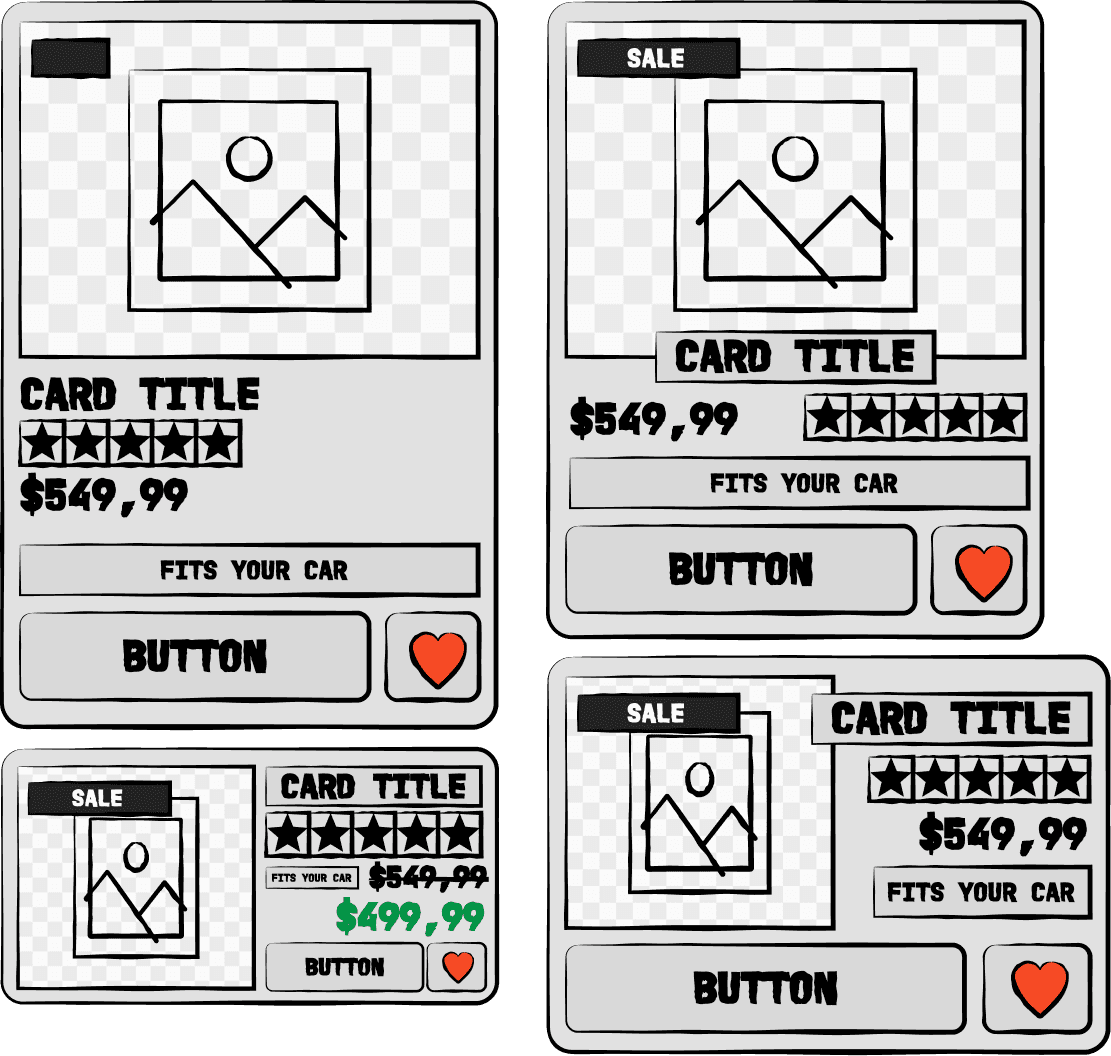
From the wireframes I was able to develop a skeleton of the proposed product card. The card is simply divided in 3 sections; top, middle and bottom. This made it easier to communicate to developers and on a design level, the card could be seamlessly shaped to adapt to different use cases or scenarios.
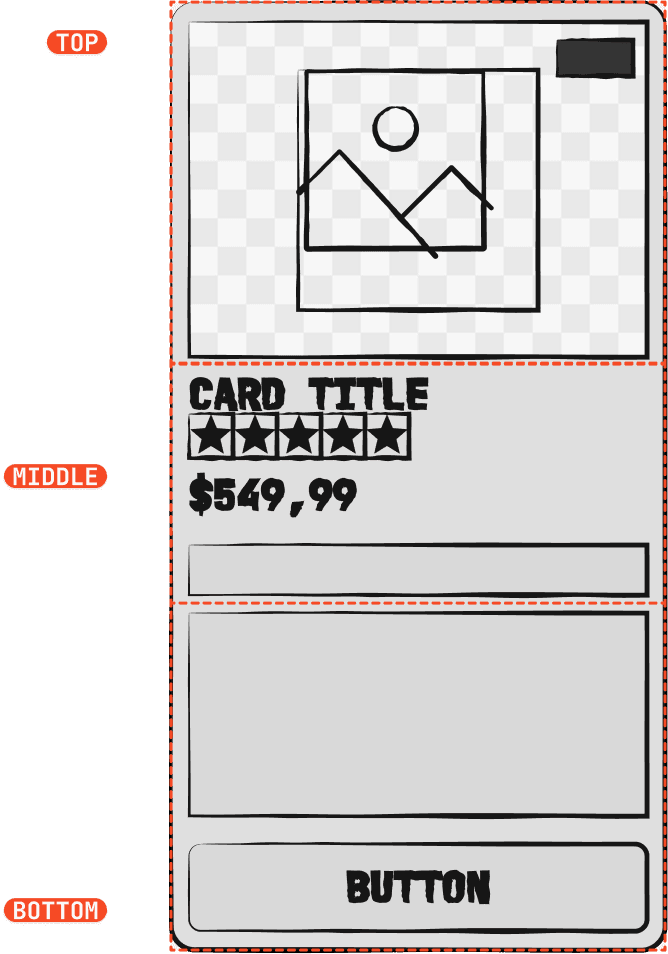
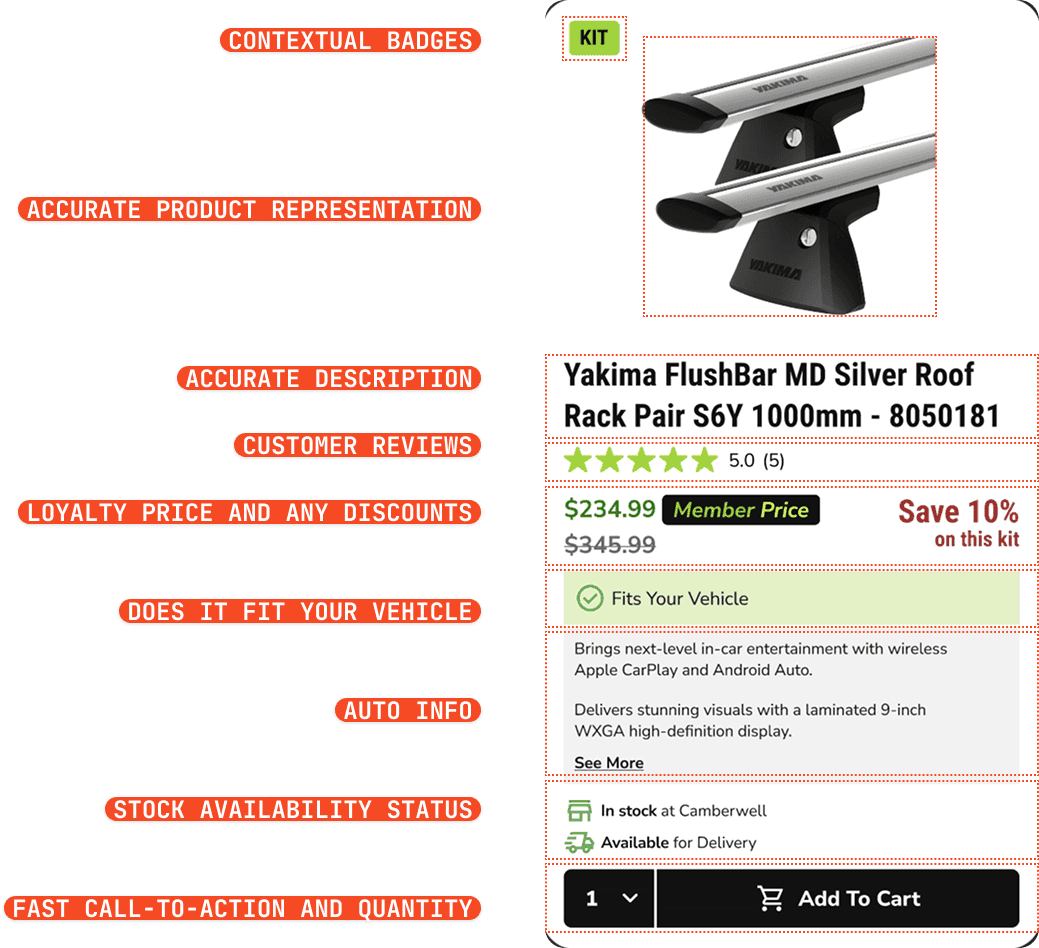
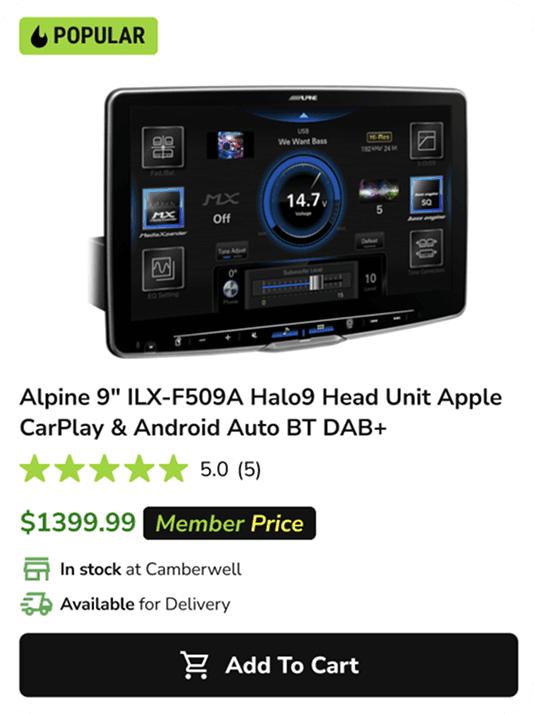
Giving customers the answers to their questions, builds trust. In the shipped version of the product card below, I have illustrated the trust signals that were included.
Inclusive Design
Outcome
The Solution
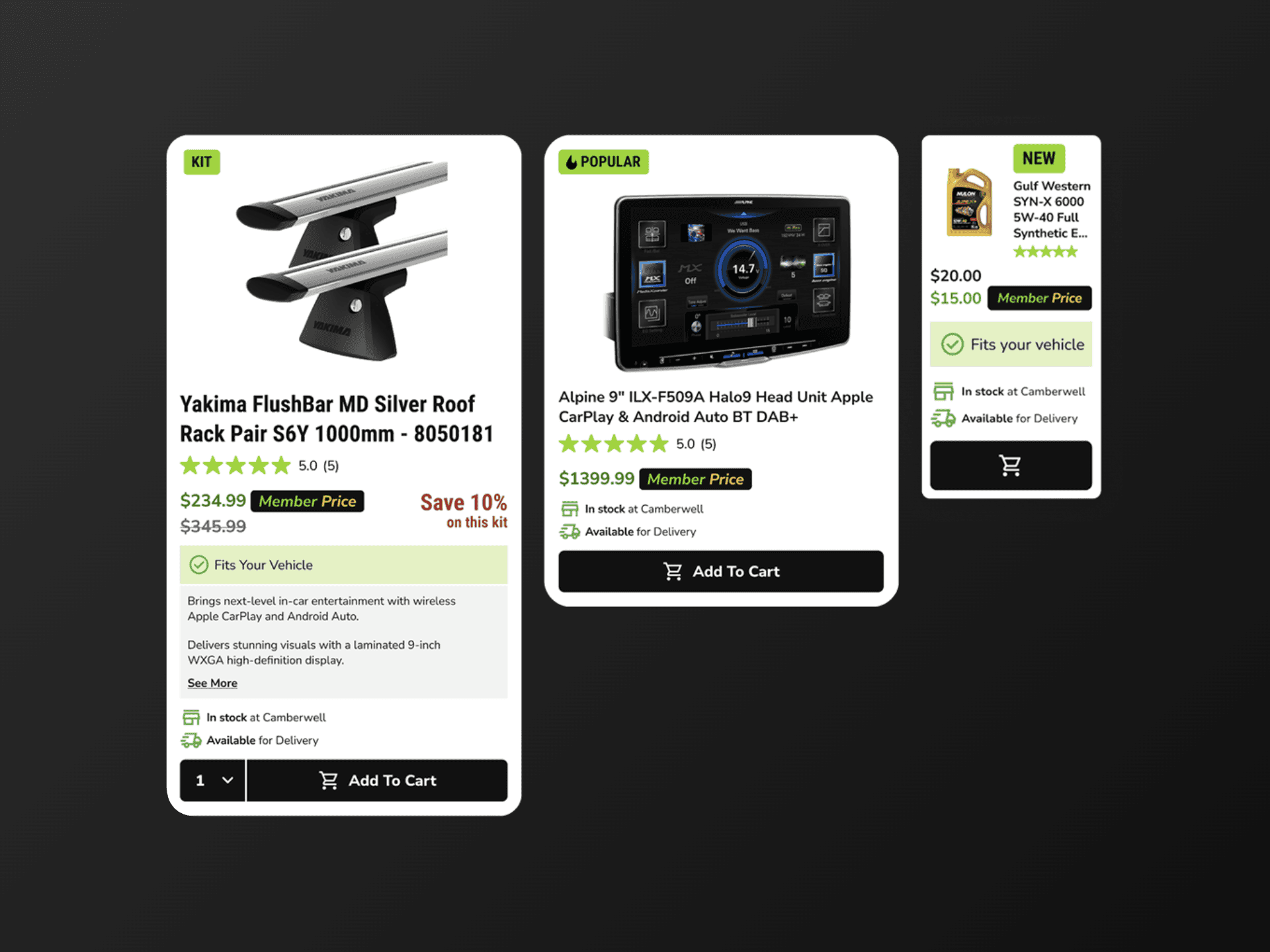
A single card component shaped to fit multiple uses.
As you can see below there are three defined sizes for the card component and they all follow the same foundations.
Testing in the Wild
Add to Wishlist
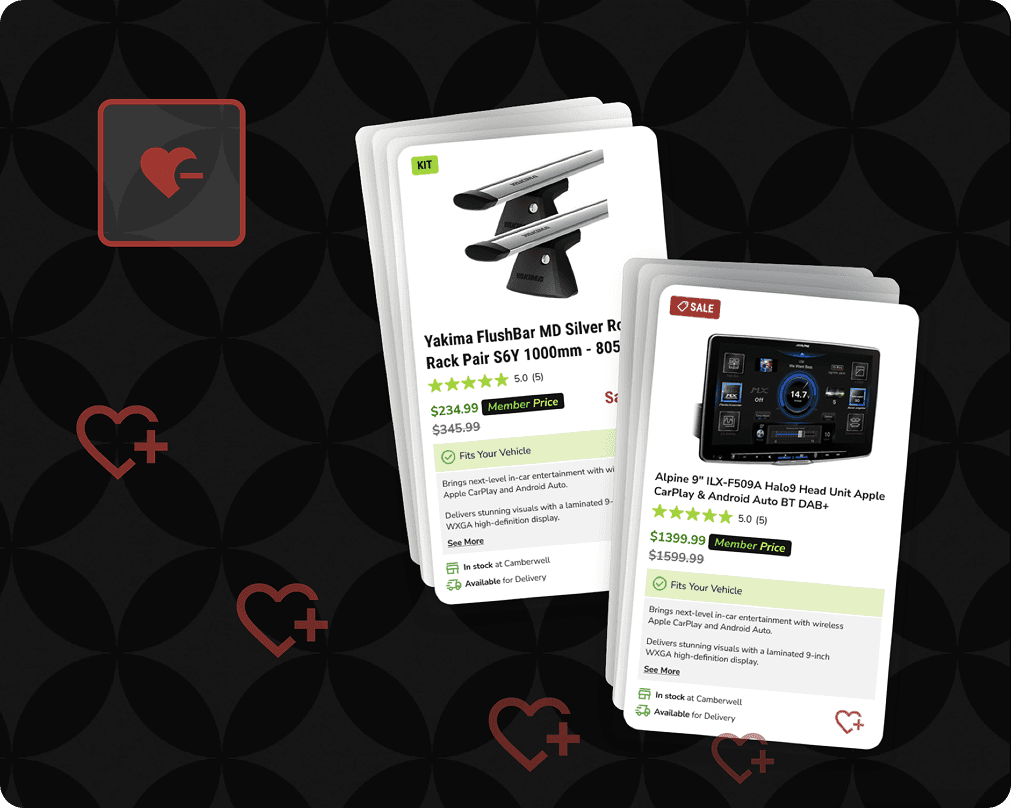
The refreshed product card was piloted during the wishlist experience initiative. The save to wishlist action now lives on every card variant.
Not every customer is ready to buy straight away. Wishlists transform the product card from a transactional prompt into a personalised, persistent shopping tool. It lets customers plan at their own pace and return with confidence. The intention was to re-engage at the right moment by notifying customers are when the price drops or stock changes which would motivate customers to come to the point in which they left off.
Result
Better for Everyone
Touch-points served by one UI component
Adaptive card variants for any screen or context
Low interaction cost. Fewer clicks needed to reach buying confidence
Consistent, trustworthy experience across the whole site